Authentic French Macarons: 7 Expert Insights on What Makes Them Authentic

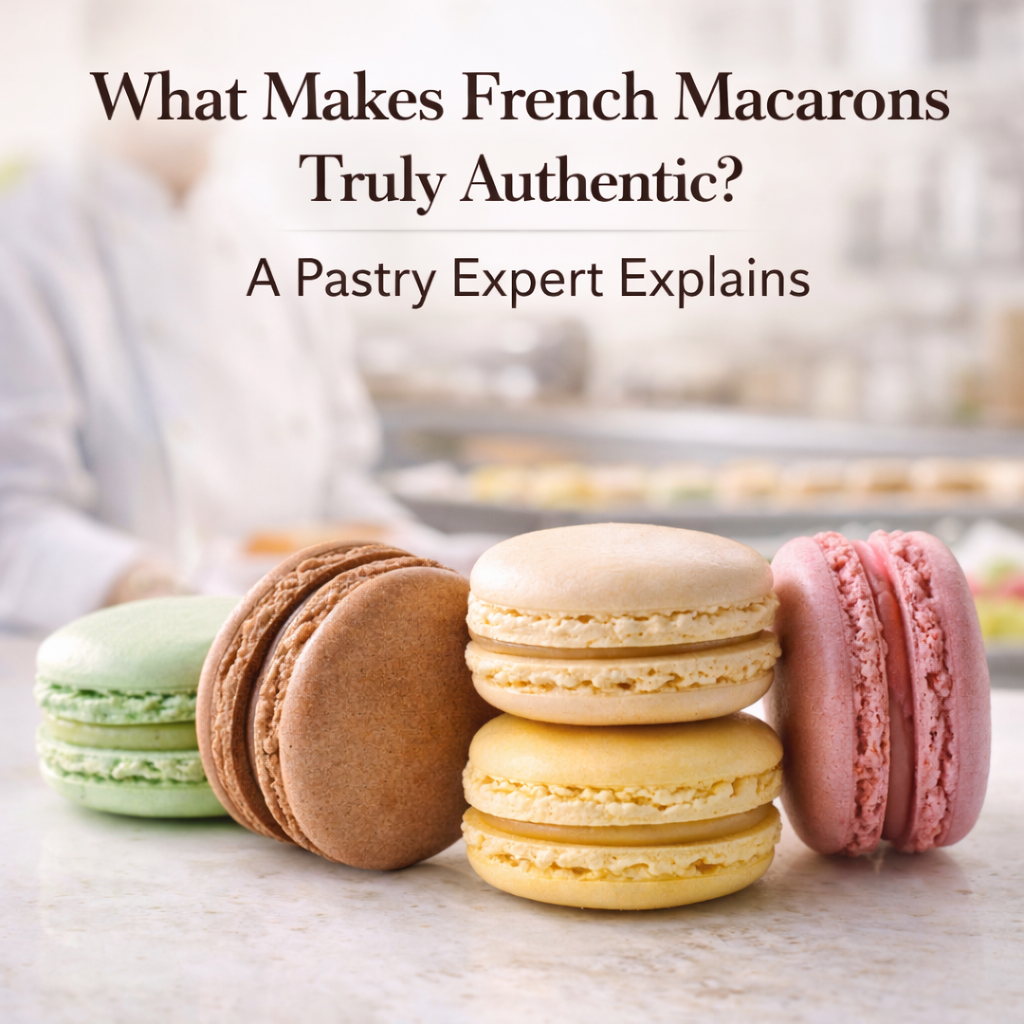
What Makes French Macarons Truly Authentic? A Pastry Expert Explains
Authentic French Macarons Begin with Technique, Not Trends
Authentic French macarons are often misunderstood in today’s dessert world. With countless bakeries offering colorful versions, it can be difficult to distinguish between true French craftsmanship and modern imitations. Authenticity in French macarons is not defined by appearance alone—it is rooted in technique, ingredients, and tradition.
As a French pastry expert, one understands that true macarons are the result of discipline, precision, and respect for classic methods passed down through generations of French pastry culture.
The Role of Traditional French Pastry Techniques
At the heart of authentic French macarons lies technique. Unlike mass-produced sweets, these luxury desserts require careful macaronage, controlled humidity, and exact baking temperatures. Even small deviations can affect shell structure, texture, and flavor.
True French macarons feature:
-
Smooth, glossy shells
-
Defined feet
-
Light, airy interiors
These characteristics separate artisan macarons from generic bakery desserts.
Why Ingredients Matter in Authentic French Macarons
Ingredients play a critical role in authenticity. Classic macarons rely on almond flour, egg whites, and fine sugar—nothing more. This is why they naturally fall into the category of gluten-free desserts.
Using inferior ingredients or shortcuts compromises both texture and flavor. High-quality almond flour desserts deliver richness without heaviness, allowing fillings such as ganache or buttercream to shine.
Texture: The Ultimate Test of Authenticity
Texture is one of the most important indicators when identifying authentic French macarons. A proper macaron should offer a delicate contrast—slightly crisp on the outside and soft on the inside.
Many imitation macarons are either too hollow, overly chewy, or cake-like. These flaws are common in mass-produced macarons and signal a lack of technical precision.
True macarons belong among refined desserts, not oversized cookies.
Flavor Balance Over Excess Sweetness
Authentic macarons prioritize balance rather than sugar overload. Traditional French dessert philosophy emphasizes subtle sweetness and clean flavor profiles.
Popular flavors such as chocolate macarons, pistachio macarons, vanilla macarons, fruit macarons, and coffee macarons should taste natural and refined—not artificial or overpowering.
This approach places macarons among gourmet desserts and premium desserts enjoyed by discerning palates.
The Visual Elegance of Authentic French Macarons
Appearance matters in French pastry, but elegance is never excessive. Authentic French macarons are uniform, smooth, and understated. Their refined look makes them ideal for wedding desserts, event desserts, and macaron gift boxes.
Unlike novelty sweets, macarons maintain a timeless aesthetic, which is why they are often featured in luxury dessert displays, macaron towers, and macaron cakes.
Why Authentic French Macarons Are Naturally Gluten-Free
Because they are made with almond flour rather than wheat flour, authentic macarons are naturally part of gluten-free bakery offerings. This was never a trend-driven decision—it is simply how macarons have always been made.
This natural composition makes them popular among those seeking gluten-free sweets that still feel indulgent and sophisticated.
Craftsmanship vs Mass Production
The biggest difference between authentic and imitation macarons is craftsmanship. True macarons are handcrafted, requiring patience and experience. Mass-produced versions often rely on stabilizers, shortcuts, and freezing methods that diminish quality.
Authentic macarons belong in French bakeries, artisan pastry kitchens, and professional environments where quality is prioritized over volume.
Why Authentic French Macarons Command Higher Value
Because of the skill and precision involved, authentic French macarons are considered luxury pastry items. They require more time, training, and attention than typical sweet treats.
This is why they perform so well in corporate dessert gifts, hotel desserts, and high-end bakery collections. Customers recognize and appreciate the difference.
Final Thoughts from a Pastry Expert
Understanding what makes French macarons truly authentic allows dessert lovers to choose wisely. Authenticity is not about trends, colors, or size—it is about technique, balance, and respect for tradition.
When crafted correctly, authentic French macarons stand among the world’s most elegant European desserts, offering an experience that is refined, memorable, and unmistakably French.
Authenticity in French macarons is ultimately about restraint and respect for tradition. Rather than chasing trends or oversized designs, true craftsmanship focuses on balance, precision, and consistency. When each element is thoughtfully executed—from shell texture to filling harmony—the result is a macaron that feels timeless. This dedication to detail is what allows authentic French macarons to remain celebrated across cultures and generations.